



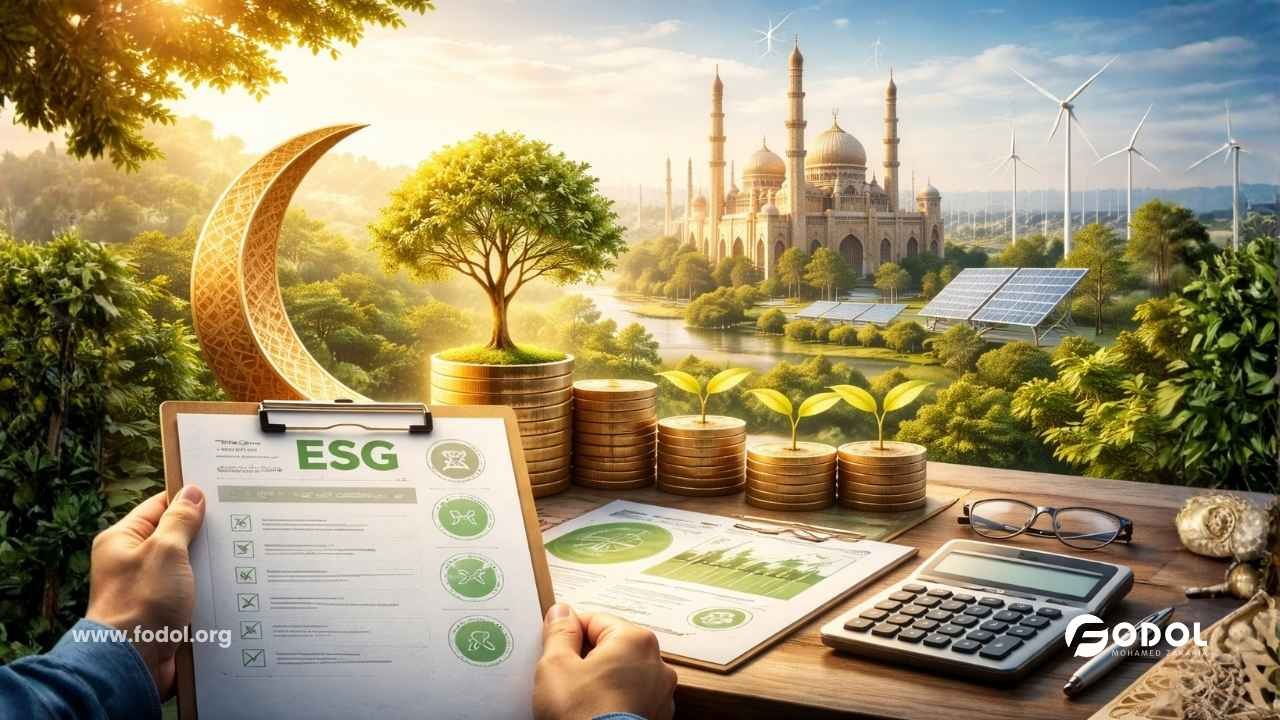
Shariah and ESG Alignment has moved from a technical discussion to a defining reference point in debates on Islamic finance, sustainability and development policy. As Environmental, Social, and Governance (ESG) benchmarks increasingly shape regulatory expectations, market access, and institutional credibility, Islamic finance is now more often assessed using externally defined sustainability standards than its ethical architecture.
This piece does not evaluate compliance or compare performance. Its purpose is to reflect on what the growing emphasis on alignment reveals about authority, standards, and shifting foundations of legitimacy in Islamic finance.
By tracing the discussion from ethical foundations to contemporary institutional practice and then to selected real-world illustrations, the analysis highlights where sustainability is embedded by design, where it depends on governance, and where alignment risks slipping into symbolism.
The Immediate Policy Question
A noticeable shift has occurred in the discussion of sustainability in Islamic finance. Ethical grounding and social orientation—once treated as inherent characteristics—are now frequently presented as claims that require external verification. In practice, ESG alignment has shifted from being a point of engagement to a condition for recognition.
This shift raises a clear and consequential following policy question: Why is Islamic finance increasingly expected to demonstrate sustainability through external ESG benchmarks despite its long-standing ethical and social foundations?
You might also like

Two dynamics intensify this tension. First, ESG frameworks and Sustainable Development Goals have acquired substantial institutional authority within global finance and development governance despite their relatively recent emergence.
Second, ESG compliance is often not treated as an evaluative lens among many but as a primary marker of legitimacy. The result is a subtle reversal of normativity: Islamic finance is increasingly framed as sustainable only insofar as it aligns with external standards rather than being assessed based on its ethical logic.
What is at stake here is not technical compatibility but the direction from which legitimacy flows.
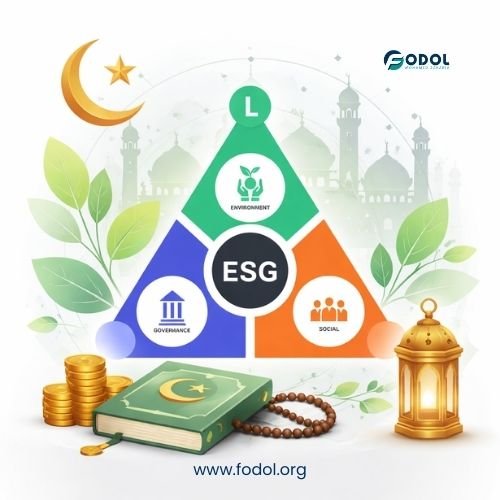
Sustainability in Islamic Economic Logic
To understand the significance of this shift, it is necessary to step back from the contemporary benchmarks. Sustainability is neither incidental nor reactive in Islamic economic thought. This is embedded in the ethical foundations of the system.
At the centre of this framework lies maqāṣid al-sharīʿah (the objectives of Islamic law), which emphasise the protection of essential human interests, social balance, and moral responsibility across generations. According to this logic, economic activity is not value-neutral. It is guided by principles that link material provision to justice, social cohesion, and restraint.
Historically, this orientation was reflected in institutional design rather than in policy labelling. Classical Islamic instruments address vulnerability through redistribution, constrain excess through asset-based finance, and link financial activity to the real economy. These mechanisms do not rely on external validation to signal their ethical purpose. Their legitimacy emerges from the coherence between values, rules, and outcomes.
Therefore, the relevant question is not whether Islamic finance can accommodate sustainability but how its original ethical orientation has been translated—or, in some cases, displaced—in modern institutional practice.
From Ethical Architecture to Modern Practice
The gap between ethical foundations and contemporary applications did not emerge accidentally. As Islamic finance has expanded within global markets, it has increasingly adopted the institutional forms, risk structures, and operational logics of conventional finance. Product replication has often become the primary mode of growth, while deeper system development has received less attention.
Within this environment, ESG frameworks have emerged as corrective overlays rather than foundational guides. Sustainability criteria are frequently applied after institutional structures are already in place, serving to enhance visibility, meet regulatory expectations, or reassure external stakeholders. In many cases, alignment became a matter of presentation rather than design.
The sequencing is important. When sustainability is introduced as a label rather than a governing principle, alignment risks become symbolic. ESG compliance may improve disclosure and comparability, but it does not automatically reconnect practice to the ethical logic that gives Islamic finance its distinctive claims.
At this point, where ethical intent, institutional incentives, and external benchmarks intersect, the distinction between substance and symbolism becomes visible. To illustrate this tension, it is necessary to turn from abstract to concrete practice.
From Values to Practice
The Shariah–ESG Alignment debate becomes clearer when we gradually move from first principles to real institutions. In Islamic finance, the question is not whether the tradition contains sustainability values; it does so. The deeper question is whether contemporary practice reflects those values through institutions, governance, and measurable outcomes, or whether “alignment” is sometimes pursued as a shortcut to legitimacy.
To make that distinction concrete, this section starts with the most mature sustainability institutions in Islamic civilisation , zakat and waqf, then moves to modern delivery models such as Qard Hasan, and finally to capital-market instruments and “green” initiatives, where the risk of symbolism can be higher.
Zakat and Waqf
A useful starting point is the dual nature of zakat and waqf: they are both personal obligations/choices and institutionalised systems. Zakat (obligatory almsgiving) exists at the individual level as a duty tied to personal wealth, yet it also operates through formal collection and distribution structures. Similarly, waqf (endowment) can be created by individuals and families, but it also evolves into durable institutions that manage assets, preserve the principal, and channel benefits to beneficiaries over time.
This dual functionality is important for the Shariah–ESG debate because it reminds us that Islamic social sustainability is not merely rhetorical; it has long been operational, with mechanisms that can be scaled, audited, and governed.
In Qatar, the Zakat Affairs/ صندوق الزكاة function within the Ministry of Endowments and Islamic Affairs explicitly frames its role as receiving zakat funds and distributing them to eligible recipients through formal channels, supported by field points and digital services. In Saudi Arabia, zakat collection is institutionalised through the Zakat, Tax, and Customs Authority (ZATCA), which publicly describes its mandate to collect zakat and achieve compliance through modern administrative infrastructure and e-services.
Waqf’s institutional continuity is also visible in jurisdictions where governance is highly formalised. In Singapore, the administration of wakaf is publicly explained through the national religious infrastructure. The Majlis Ugama Islam Singapura (MUIS), also known as the Islamic Religious Council of Singapore, maintains dedicated resources for wakaf administration and education. At the state-law interface, Singapore’s Ministry of Law clarifies governance expectations for mutawallis and their obligations, including record-keeping and audited financial statements under applicable rules.
Taken together, these cases support a simple but often overlooked point: zakat and waqf already represent a long-standing sustainability architecture, especially social sustainability—operating simultaneously through individual compliance and institutional implementation. ESG frameworks may help with comparability and external communication, but they do not create the underlying ethical logic or institutional possibility.
Qard Hasan in Practice
From this foundation, modern interest-free microfinance can be viewed as a contemporary operational extension of Islamic social ethics, particularly through qard ḥasan (benevolent loan) structures. Here again, the credibility question is practical: do these institutions deliver inclusion and resilience outcomes in ways that are repeatable and disciplined?
Akhuwat in Pakistan is widely cited as a flagship model of interest-free microfinance based on community-based governance and social trust. Importantly, the “substance” argument is not simply moral but also empirical. Policy and academic sources report exceptionally high recovery/repayment performance, commonly described as around 98% in policy work, and even higher in some academic analyses depending on the period studied. This is important for Shariah–ESG Alignment because it shows a form of legitimacy that does not primarily depend on ESG signalling. Instead, legitimacy emerges from performance, delivery capacity, and ethical constraints embedded in the model.
In Türkiye, İKSAR offers a locally grounded illustration of how karz-ı hasen (qard ḥasan) can be translated into an institutional practice. İKSAR defines qard hasa as a loan repaid at the same amount without any additional charge and provides structured guidance on eligibility, application, and program rules through its official platforms. Importantly, the program is framed publicly as a practical contribution to sustainable development and real-economy support, again emphasising implementation rather than branding.
İKSAR is an evidence-based case that has been academically examined. Ülev’s, (2021) doctoral dissertation explicitly evaluates the outcomes and effectiveness of the İKSAR Karz-ı Hasen Program over a defined period and develops recommendations for improving the program’s impact and implementation quality.
At this stage, a coherent pattern emerges: when Islamic social finance institutions are designed with clear rules, strong community anchoring, and disciplined program governance, sustainability appears as substance, not as a label.
Green and Hybrid Instruments
Environmental sustainability is conditional. Social sustainability is structurally embedded in zakat, waqf, and qard-hasan-based models through the mechanisms of redistribution, inclusion, and resilience-building. In contrast, environmental sustainability generally requires explicit project definition, monitoring, and reporting. This difference explains why the “Shariah label” alone cannot guarantee environmental substance.
Indonesia’s sovereign Green Sukuk programme is often treated as a benchmark because it embeds “substance mechanisms” into the instrument itself: eligible project categories, management of proceeds, and publication of allocation and impact reporting through the Ministry of Finance. The UNDP’s technical note on Indonesia’s green bond/green sukuk initiative also highlights the governance logic around proceeds tracking and reporting on environmental benefits, reinforcing that credibility must be engineered.
Hybrid instruments further test whether Islamic social finance can meet modern verification standards without abandoning its internal logics. Indonesia’s Cash Waqf Linked Sukuk (CWLS) is widely described as a structure formed through coordination among key public financial institutions, integrating cash waqf mobilisation with government sukuk placement and social purpose spending channels. From a “substance” perspective, the key value of CWLS is that it attempts to retain the waqf’s enduring social purpose while using capital-market discipline to improve traceability and institutional coordination.
Malaysia’s Sukuk Ihsan is a similarly important anchor case for social sustainability through market instruments. Official issuer communications describe the SRI sukuk tranches and their link to the Trust Schools Programme. Independent third-party coverage, such as RAM Ratings’ note referencing the use of proceeds for the Trust Schools Programme, further strengthens the credibility of the “what it funded” narrative (RAM Ratings 2022).
Therefore, across Green Sukuk, CWLS, and Sukuk Ihsan, the logic is consistent: substance increases when reporting, governance, and project channels are built into the design rather than implied through alignment language.
Green Zakat and Symbolism Risk
Having recognised zakat as a long-established institution of social sustainability, the Green Zakat Framework must be approached carefully. Developed with UNDP involvement alongside BAZNAS, Bank Syariah Indonesia (BSI), and Indonesia’s Ministry of Religious Affairs, the initiative presents zakat as a vehicle for climate resilience and sustainable development.
However, the maturity of zakat raises a higher standard of scrutiny. Zakat is not a flexible charitable tool that can be thematically rebranded without consequences. Its beneficiaries (aṣnāf) and distributive objectives are clearly defined in foundational sources, and its mandate is deliberately broad, addressing poverty, vulnerability, indebtedness, and social fragility across society. Framing zakat primarily through a “green” lens, therefore, risks narrowing an institution designed to serve multiple, overlapping needs.
Three concerns follow:
- First, mission narrowing While climate vulnerability is real, restricting zakat’s narrative to environmental objectives risks reshaping priorities and public understanding of zakat. Zakat’s legitimacy does not depend on thematic alignment; it derives from its comprehensive social purpose.
- Second, the direction of legitimacy is considered. A heavy reliance on SDG language and international development framing may unintentionally suggest that zakat becomes “sustainable” only after being translated into external paradigms. This reverses the tradition’s logic, where ethical obligation precedes modern frameworks and not the other way around.
- Third, additionality and discipline are required. Because zakat already targets vulnerable groups, “green” framing must demonstrate clear added value—distinct outcomes that would not have emerged through standard disbursement. Without such evidence, the risk is narrative relabeling rather than substantive innovation. Moreover, an emphasis on easily measurable “green” outputs may incentivise form over substance, subtly distorting zakat’s distributive priorities.
In this sense, “Green Zakat” can function either as a meaningful extension or as a symbolic layer of Zakat. The distinction lies not in intention but in institutional design, governance, and evidence. As with earlier cases, the challenge is not a deficit in Islamic values but whether contemporary frameworks strengthen, or unintentionally dilute, the institutions meant to embody them.
Policy and Institutional Implications
The discussion above points to a set of implications that matter not only for scholars but also for policymakers, regulators, and practitioners shaping the future of Islamic finance. These are not technical observations; they go to the heart of how legitimacy, trust, and purpose are constructed in practice.
- ESG alignment is not a substitute for ethical substance: Aligning with ESG benchmarks may improve visibility and comparability, but it does not automatically guarantee that institutions operate in accordance with Islamic ethical objectives. When alignment becomes the end rather than the means, ethical legitimacy risks being reduced to compliance exercises.
- Symbolic sustainability carries reputational risks: the growing use of sustainability labels without corresponding institutional reform increases the danger of greenwashing. Over time, this can weaken confidence, particularly among stakeholders who expect Islamic finance to offer more than a rebranded version of conventional practice.
- Mission drift is a real concern: narrow thematic framing—especially when driven by external agendas—can subtly shift priorities away from the broad social mandate embedded in Islamic finance. When institutions adapt their narratives faster than their governance structures, their purpose can quietly erode.
- A strategic opportunity is being underutilised: Islamic finance has the conceptual depth and institutional tools to contribute a distinctive sustainability model to the global debate. Treating ESG as the primary source of legitimacy risks positioning Islamic finance as a follower rather than as a system capable of shaping sustainability norms on its own terms.
Taken together, these points suggest a simple but important insight: without institutional coherence rooted in Islamic ethical logic, ESG alignment is unlikely to be transformative.
Rethinking Shariah and ESG Alignment
At this stage, a shift in perspective is necessary. The question facing Islamic finance is not whether it can comply with ESG standards; it clearly can. The more important question is whether compliance has replaced reflection.
A more constructive framing would move the debate away from meeting benchmarks and toward defining sustainability. What does sustainability look like when articulated from Islamic objectives rather than translated into external categories?
This reframing does not reject the notion of empirical accountability. In contrast, it invites a dual assurance logic: ethical coherence grounded in Shariah objectives combined with transparent and credible reporting. The challenge lies not in adding more labels but in aligning governance, incentives, and oversight with the system’s original moral architecture.
Ultimately, the debate is less about alignment and more about authority, who sets the terms through which sustainability is understood and evaluated.
Open Question
If Islamic finance is normatively sustainable by design, why has sustainability proof been increasingly outsourced to external ESG frameworks? What institutional shifts are needed to restore substance over symbolism?
_____________________